top of page


Editorial Apprentice
genesis Literary & Arts Magazine, IU Indianapolis
During my last year of study, I was able to take ENG - W280 Literary Editing & Publishing. This class teaches students the art of editing and publishing with respect to literary journals. It also provides hands-on experience for students by giving them the opportunity to be Editorial Apprentices for IU Indianapolis' student literary journal, genesis.
Projects & Experience
Studying the Art of the Literary Magazine
Over the course of the semester, we learned about the process of creating a literary magazine. We broke down the concept of aesthetic and how that applies when not only designing an overall look or mission for a magazine, but also how to apply aesthetic when selecting pieces of work to include in the magazine.
We practiced this process by reading pieces of poetry, fiction, and creative nonfiction from the 2024 Pushcart Prize Best of the Small Presses anthology. We simulated the selection process by collaborating as a class to choose the pieces from the anthology that we would be reading over the semester.

"Throughout this practice, I realized the importance of being deliberate, intentional, and mindful while also being
being true to my own intuition and perspective. In doing so, you create a collaborative process that not only benefits you and your group but also your future readers and authors. "
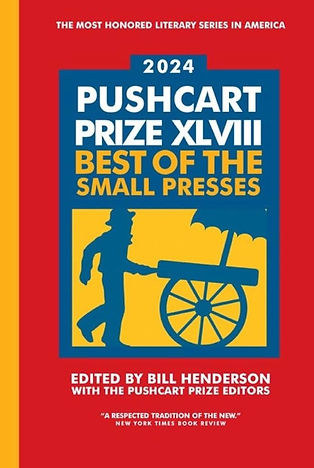
Starting with the selection process helped me understand how creating a literary magazine is a collaborative process and the steps that go into creating one.
Hands on Experience


Bella and I @ genesis release party
The next challenge of W280 was assisting the editorial staff of IU Indy's student literary magazine, genesis. After careful deliberations the staff sent the W280 class submitted pieces that they had been split on in the voting process. We were left to make the tie breaking votes.
Working with actual pieces that were submitted by our peers gave us great hands on experience in editing and publishing.


This process allowed me to practice critically evaluating written work while keeping the end goal of the literary magazine in mind. Even if I liked a piece I had to consider if it was right for genesis.
I also practiced collaborative decision making, considering what points my classmates were bringing to the table about each piece discussed and evaluating those points when making my final vote
Lastly, we were able to practice the importance of ethics when creating a literary magazine. As a class, we intentionally focused on making sure each piece was handled with care and maintained the ethics under which it was submitted, as conceived by the genesis staff.
Editing Philosophy


Prototype Journal
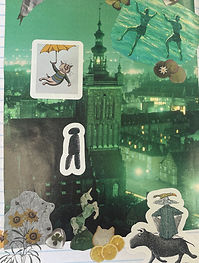

"Note from the editors"
Over the course of the semester, my views of editing and publishing became more well-rounded and understood. Through hands-on experience like above or theoretical practice in conceptualizing a prototype literary journal, I was able to begin to understand the importance of editing and literary journals, as well as what those concepts meant to me. We were then asked to create a personal editing philosophy based around what we had learned not only in class but about ourselves through the semester.
My Personal Editing Philosophy
(work in progress, from now until forever)
"As an editor, I view each story I get the pleasure of reading in the editing process as a delicate stepping stone on the way to its final destination. I understand that there is something only I can offer each story, a unique perspective, while also striving to preserve the author's voice and intent. I hope my work in editing can happen in conversation with an author’s thought process. My goal is to be a valued opinion that can uplift an author’s work, but I also want an author to know that I value their thoughts and opinions most. Ultimately, it is theirs. I like to think of it as that saying that's posted around the National Parks, “Take only pictures, leave only footprints”. While I want my editing work to have a beneficial impact on an author’s story, and I hope to have created an uplifting, creative, and collaborative process, I don’t want to leave any distinct traces of myself behind in the work. As an editor, I want to collaborate in an exciting and welcoming environment that will be the most beneficial to the author and their story. I want them to walk away feeling rewarded and confident first and foremost. And if I am able to accomplish that, then I will be rewarded and confident as an editor."
bottom of page